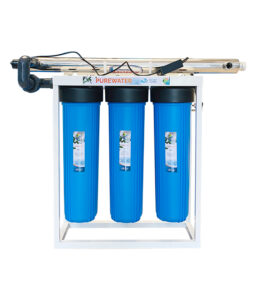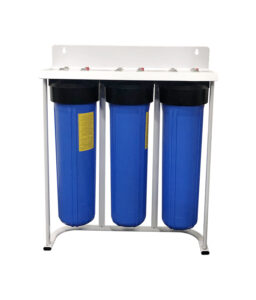
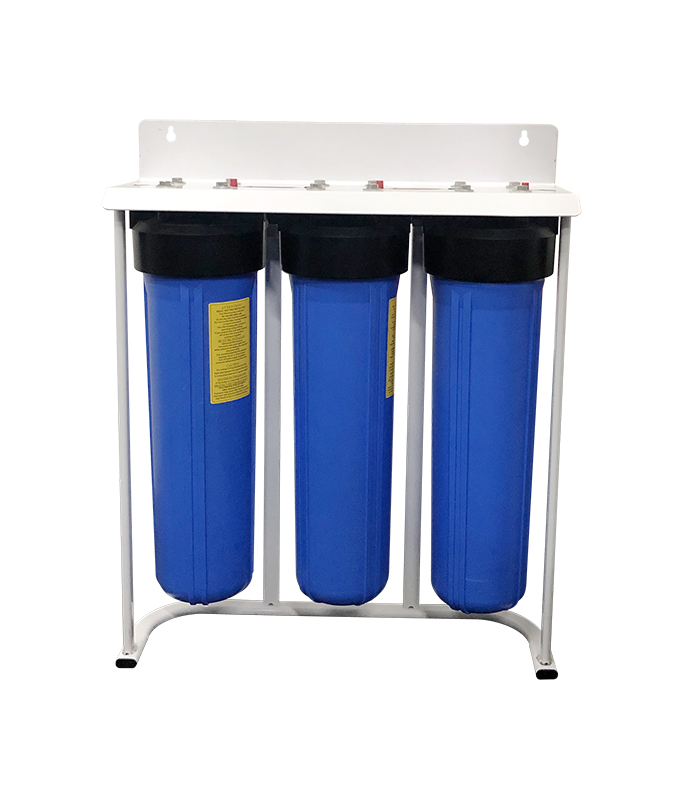
Toppurror Whole House System
- Estimated Delivery : Up to 4 business days
- Free Shipping & Returns : On all orders over $200
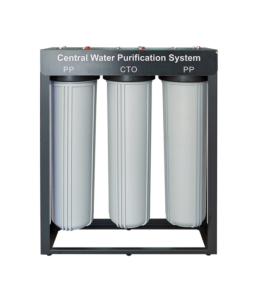
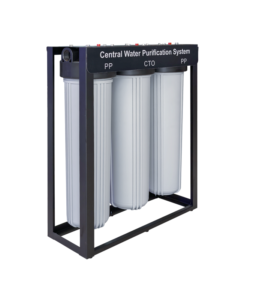
Triple Stage Whole House System
nThe Whole House System is designed with a three-stage water filtration system that consists of Polypropylene Sediment Removal filters and An Activated Carbon Block filter.
n
nThe following are the filtration stages of a Whole House System
n
First & Third Stage Filtration (Polypropylene Sediment removal Filters)
nThis sediment filter is for domestic water filtration purposes. It is designed to filter out sediments such as rust, mud, and dust particles from the municipality and rainwater.
n
nThe polypropylene sediment removal filter cartridge is constructed by three layers three of heat melting polypropylene. Compared to monolayer, the application life of PP melt blown filter cartridge with three layers is much longer. Therefore, the maintenance of the filters can be cut down a lot Using the right heating way for PP fiber, it can reduce the filtering resistance a lot and enlarge the water flow much The uniform space of fiber can achieve an excellent filtering effect As the filter cartridge is only made from polypropylene, the resistance to chemical reagents for both organic solvent and the inorganic solvent is all good.
n
n
nIf the RO system is not equipped with a polypropylene sediment removal filter, the raw water directly enters the RO membrane. Excessive particles, precipitates, microorganisms, and bacterial viruses that are not treated will block in the RO membrane, and the life of the RO membrane will be shortened, which will also affect the quality of the final water.
n
n
n
FUNCTION:
n
-
n
- The function of the polypropylene sediment removal filter cartridge filter is to separate substances or particles from the liquid. The cartridge filter is a medium to filtrate substance that flows with liquid. Cartridge filter in this project focuses on a water filtration system that usually used at houses and small-scale industries. The volume flow rate relates to the pressure of the water that flows through the pipe system. Cartridge filter function as a media that reduced pressure from the water flow and call pressure drop. Sediment sand particles function as particles that flow with the water and will filtrate with a cartridge filter. Sediment sand makes contact on the surface of the cartridge filter depend on the volume flow rate of water. The cartridge will be clogged because of sediment sand clog on the surface of the cartridge filter when tried to enter the cartridge filter. This situation makes the filtration system has different pressure on the entrance and the exit of the cartridge housing. Different pressure call pressure drop represents the pressure drop of the cartridge. The pressure drop can relate to the volume flow rate and determining the life span and maximum condition of the cartridge filter. The maximum clogging condition happens because the pressure of the cartridge filter does not increase anymore and the cartridge filter has fully clogged with sediment sand.
n
nFor More Information On the Polypropylene Sediment Filter, Click Here
n
Second Stage Filtration (Activated Carbon Block Filter)
nCTO Carbon block filters are made from activated carbon and its specific function is the chemical adsorption of impurities and contaminants in drinking water.
n
nActivated carbon block filter is an ideal medium for treating contaminants in water, offering a large surface area for the adsorption of dissolved matter. Building upon this, the solid carbon block enhances the medium by preventing channeling, increasing surface contact time, and enabling custom pore formulation for mechanical filtration. Carbon Blocks are one of the most effective and widely used technologies in the Point Of Use (POU) drinking water treatment industry.
n
n
n
n
-
n
- Activated Carbon for Water Filtration
- Why Carbon Block is the Better Choice
- How Carbon Blocks Filter Water
- Compressed vs. Extruded Carbon Block Manufacturing Processes
- Carbon Block vs. Other Filtration Technologies
- Design Parameters
- Performance Indication Device
- Advantages of a Custom Filter
- Choosing a Custom Carbon Block Supplier
- Your Custom Carbon Block Specifications
n
n
n
n
n
n
n
n
n
n
n
n
n
n
Function Of An Activated Carbon Block Filter Cartridge:
nCarbon block filters are made from activated carbon. Its function is to adsorb chemical impurities and contaminants in drinking water. Carbon filters are widely used to remove chlorine, taste, odor, and color.
n
nFor More Information One The Activated Carbon Block Filter, Click Here
Shipping policy
At our Company, we understand the importance of timely delivery. We offer a variety of shipping options to suit your needs, including standard, expedited, and express shipping. Our dedicated team works diligently to process and dispatch your orders promptly, aiming to deliver them to your doorstep within the estimated timeframe.
We strive to provide fast and reliable shipping to our customers. Here\\\’s everything you need to know about our shipping process:
- Dispatch: Within 24 Hours
- Free shipping across all products on a minimum purchase of $99.
- International delivery time 5 to 7 business days
- Cash on delivery might be available
- Easy 30 days returns and exchanges
Please note that delivery times are estimates and may vary depending on factors such as product availability, destination, and carrier delay
Returns policy
We want you to be completely satisfied with your purchase from our website. If for any reason you are not entirely happy with your order, we\\\’re here to help. Certain exclusions and conditions may apply, so we encourage you to review our detailed return policy for more information. Rest assured, our goal is to ensure your complete satisfaction with every purchase you make from our website
- Returned items must be unused, undamaged, and in the same condition as received.
- Original tags, labels, and packaging must be intact and included with the returned item.
- Proof of purchase, such as your order confirmation or receipt, is required for all returns.
Related products
-
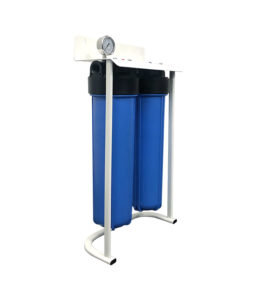
Aqua Care Double Stage
R2,277 -
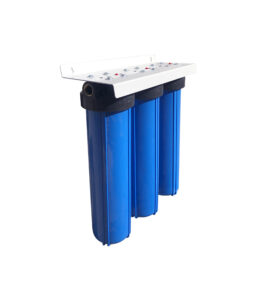
Whole House System (Bracket)
R2,070 -
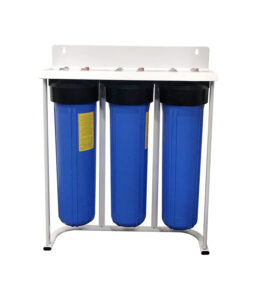
Toppurror Whole House System
R2,760 -
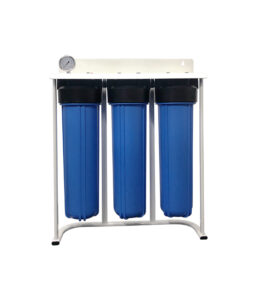
Aqua Care Triple Stage
R3,000 -
-