What Is Total Dissolved Solids (TDS) in Water? A Complete Guide
What Is Total Dissolved Solids (TDS)? If you’ve ever received a water analysis report or used a digital water tester, you’ve probably come across this important measurement. However, many people don’t fully understand what it means or why it matters.
Simply put, Total Dissolved Solids (TDS) measures the amount of dissolved minerals, salts, metals, and other substances present in water. Unlike sediment or suspended particles, these dissolved solids remain invisible because they are completely dissolved in the water. As a result, even crystal-clear water can contain high TDS levels.
Although some dissolved minerals occur naturally and even improve the taste of drinking water, excessive TDS can create several problems. For example, it may affect the flavor of water, reduce the efficiency of household appliances, contribute to scale build-up, and shorten the lifespan of water treatment equipment. Furthermore, unusually high TDS readings may indicate that additional water testing is necessary.
Whether your water comes from a municipal supply, borehole, river, dam, or rainwater harvesting system, understanding TDS helps you make informed decisions about filtration and purification. In this guide, you’ll discover what TDS is, how it is measured, what causes high readings, and which treatment methods work best for different applications.
What Is Total Dissolved Solids (TDS)?
Total Dissolved Solids (TDS) refers to the combined amount of dissolved inorganic and organic substances found in water. These substances dissolve completely and pass through the water as microscopic ions or molecules, making them impossible to see with the naked eye.
Unlike suspended particles that create cloudy water, dissolved solids remain evenly distributed throughout the water. Consequently, water can appear perfectly clean while still containing a high concentration of dissolved minerals.
Common substances that contribute to TDS include:
- Calcium
- Magnesium
- Sodium
- Potassium
- Chlorides
- Sulphates
- Bicarbonates
- Iron
- Manganese
- Nitrates
- Trace minerals
- Naturally occurring salts
Most of these minerals enter water naturally as it moves through rocks and soil. However, agricultural activities, industrial processes, wastewater discharge, and municipal water treatment can also increase TDS levels.
Water professionals usually express TDS in milligrams per liter (mg/L) or parts per million (ppm). In most cases, these two units are considered equivalent for practical water treatment purposes.
Why Does TDS Matter?
Understanding TDS gives you valuable insight into overall water quality. Although TDS does not identify individual contaminants, it provides an indication of the total concentration of dissolved substances present in the water.
For homeowners, this information helps determine whether additional filtration may improve taste or protect appliances. Likewise, businesses use TDS measurements to monitor water quality for manufacturing, food production, healthcare, and commercial operations.
In addition, many water treatment professionals monitor TDS to
- Evaluate overall water quality
- Monitor reverse osmosis performance
- Identify changes in water sources
- Protect plumbing systems
- Reduce scale formation
- Improve drinking water taste
- Support preventive maintenance
- Verify treatment efficiency
Because TDS responds quickly to changes in water quality, routine testing often provides an early warning that further investigation may be necessary.
What Causes High Total Dissolved Solids?
Several natural and human-related factors influence TDS levels. While some causes are completely normal, others may require corrective action.
1. Natural Mineral Dissolution
As groundwater moves through rock formations, it dissolves naturally occurring minerals such as calcium, magnesium, sodium, and bicarbonates. Consequently, groundwater and borehole water often contain higher TDS levels than surface water.
2. Borehole Water
Borehole water remains underground for extended periods. During that time, it continues dissolving minerals from surrounding geological formations. Therefore, many boreholes produce water with elevated TDS, especially in regions with limestone or mineral-rich rock.
3. Agricultural Runoff
Agricultural activities can significantly increase dissolved solids. Fertilizers, irrigation return flows, and animal waste introduce additional salts, nitrates, and other dissolved substances into nearby rivers, dams, and groundwater.
4. Industrial Activities
Industrial operations may also contribute to higher TDS concentrations. Mining, manufacturing, chemical processing, and wastewater discharge can all introduce dissolved minerals into local water supplies if they are not carefully managed.
5. Municipal Water Supplies
Municipal drinking water often contains naturally occurring dissolved minerals that remain after treatment. Although municipalities remove harmful contaminants, they usually leave beneficial minerals in the water because these minerals do not pose a health risk.
6. Coastal Areas
Communities located near the coastline sometimes experience elevated TDS because seawater intrusion increases dissolved salt concentrations in groundwater supplies.
How Is Total Dissolved Solids (TDS) Measured?
Fortunately, measuring TDS is quick, simple, and affordable.
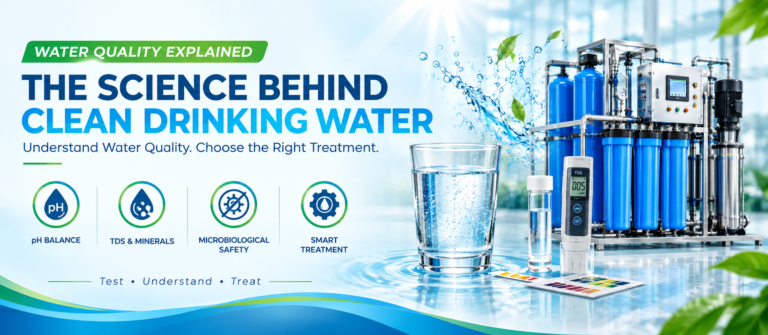
Most homeowners and technicians use a digital TDS meter, which estimates dissolved solids by measuring the electrical conductivity of the water. Because dissolved minerals conduct electricity, the meter converts conductivity into an approximate TDS reading.
Using a handheld TDS meter typically involves four simple steps:
- Collect a clean water sample.
- Turn on the digital TDS meter.
- Immerse the probe in the sample.
- Wait a few seconds for the reading to stabilize.
Although handheld meters provide fast results, laboratories use more advanced analytical methods when greater accuracy is required. Laboratory testing not only confirms the overall TDS level but also identifies the specific dissolved minerals and contaminants present in the water.
For this reason, professionals often combine TDS testing with a full water analysis before recommending a treatment system.
Understanding Typical TDS Levels
Although acceptable TDS levels vary depending on the application, the following guide provides a useful reference.
| TDS (mg/L or ppm) | Water Quality |
|---|---|
| Below 50 | Very low mineral content |
| 50–150 | Excellent |
| 150–300 | Good |
| 300–500 | Acceptable |
| 500–1,000 | High |
| Above 1,000 | Very high – treatment recommended |
It’s important to remember that TDS alone does not determine whether water is safe to drink. Instead, it indicates the total concentration of dissolved substances. Therefore, identifying the individual minerals and contaminants through a comprehensive water analysis remains essential.
Common Sources of High TDS
High TDS may occur in:
- Borehole water
- Groundwater
- Coastal areas
- Mining regions
- Agricultural areas
- Industrial zones
- Brackish water supplies
Identifying the source helps determine the most appropriate treatment solution.
Health and Operational Impacts of High TDS
One of the biggest misconceptions about Total Dissolved Solids (TDS) is that a high reading automatically means the water is unsafe to drink. In reality, TDS measures the total concentration of dissolved substances, not whether those substances are harmful.
Some dissolved minerals, such as calcium and magnesium, are naturally present in water and can contribute to its taste. However, very high TDS levels may indicate elevated concentrations of salts, metals, or other contaminants that require further investigation.
For this reason, a comprehensive water analysis is always recommended alongside TDS testing.
Effects on Drinking Water
High TDS may:
- Give water a salty, bitter, or metallic taste.
- Affect the appearance of beverages such as tea and coffee.
- Leave mineral deposits in kettles and coffee machines.
- Reduce consumer confidence in drinking water quality.
Although taste is often the first sign of elevated TDS, laboratory testing is the only reliable way to determine which dissolved substances are present.
Effects on Plumbing and Appliances
Water with elevated TDS can increase mineral deposits throughout plumbing systems and equipment.
Over time, this may result in:
- Reduced water flow.
- Blocked pipes.
- Scale build-up.
- Reduced appliance efficiency.
- Increased maintenance costs.
- Shorter equipment lifespan.
Commercial and industrial facilities often monitor TDS to help protect expensive process equipment.
Effects on Reverse Osmosis Systems
Reverse osmosis systems are specifically designed to reduce dissolved solids.
However, extremely high TDS feed water can
- Increase operating pressure.
- Reduce membrane efficiency.
- Increase concentrate production.
- Raise energy consumption.
- Accelerate membrane fouling and scaling.
Selecting the correct RO membrane and pretreatment system is essential when treating high-TDS water.
How to Reduce High TDS in Water
The most effective treatment method depends on the specific dissolved substances identified during water testing.
Reverse Osmosis
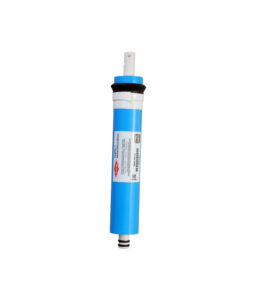
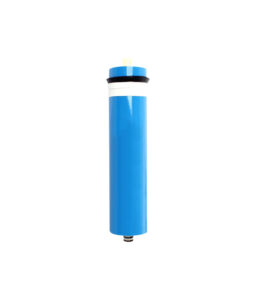
Reverse osmosis is widely regarded as one of the most effective technologies for reducing total dissolved solids.
RO membranes remove many dissolved salts, minerals, and other contaminants while producing high-quality drinking water.
Reverse osmosis is commonly used in:
- Residential drinking water systems
- Commercial water treatment
- Industrial process water
- Food and beverage production
- Pharmaceutical manufacturing
Deionisation (DI)
Deionization removes dissolved ions using specialized ion exchange resins.
DI systems are commonly used where ultra-pure water is required, including:
- Laboratories
- Medical facilities
- Electronics manufacturing
- Pharmaceutical production
Ion Exchange
Ion exchange systems remove specific dissolved minerals by replacing them with other ions.
Water softeners are one example of ion exchange technology and are commonly used to reduce calcium and magnesium hardness.
However, water softeners do not significantly reduce overall TDS because the removed minerals are replaced with sodium or potassium ions.
Distillation
Distillation removes dissolved solids by converting water into steam and condensing it back into liquid.
Although highly effective, distillation is generally less practical for large-scale residential or commercial applications because of its energy requirements.
Choosing the Right Water Treatment Solution
No single treatment technology is suitable for every water source.
Selecting the right solution depends on:
- TDS level
- Water source
- Water usage
- Daily demand
- Specific dissolved contaminants
- Budget
- Results of a comprehensive water analysis
Professional water testing helps determine which treatment system will provide the best long-term results.
Can Low TDS Be a Problem?
Many people assume that the lower the TDS, the better the water.
However, extremely low TDS water is not always desirable.
Very low mineral content may:
- Produce flat-tasting water.
- Increase the corrosiveness of water under certain conditions.
- Require remineralization for some drinking water applications.
The ideal TDS depends on the intended use of the water.
Common Mistakes When Interpreting TDS
Misunderstanding TDS readings often leads to incorrect treatment decisions.
Assuming High TDS Means Unsafe Water
TDS indicates the amount of dissolved material, not its toxicity.
A laboratory analysis is required to identify the specific dissolved substances.
Relying Only on a TDS Meter
A TDS meter provides a useful estimate but cannot identify individual contaminants.
Comprehensive water testing remains essential.
Ignoring Sudden Changes
A rapid increase in TDS may indicate changes in the water source, equipment failure, or contamination.
Investigate unexpected changes promptly.
Installing the Wrong Treatment System
Different dissolved substances require different treatment methods.
Professional water analysis helps ensure the correct solution is selected.
Frequently Asked Questions
What is a good TDS level for drinking water?
Many drinking water supplies fall between 50 and 300 mg/L (ppm).
The ideal value depends on the source water, local regulations, and personal preference.
Does boiling water reduce TDS?
No.
Boiling water removes some microorganisms but does not remove dissolved solids.
In fact, evaporation can slightly increase TDS by concentrating the remaining minerals.
Can activated carbon remove TDS?
No.
Activated carbon improves taste, odor, and chlorine removal but does not significantly reduce dissolved minerals.
Reverse osmosis or deionization is generally required.
Is high TDS always harmful?
Not necessarily.
Some naturally occurring minerals contribute to TDS without posing a health risk.
However, very high TDS levels should be investigated to determine their source.
How often should TDS be tested?
Testing frequency depends on the water source.
Borehole water and commercial systems are often tested more frequently than municipal supplies to monitor changes in water quality.
Final Thoughts
Understanding what Total Dissolved Solids (TDS) are is essential for evaluating water quality and selecting the right treatment solution. While TDS does not identify individual contaminants, it provides a valuable indication of the overall concentration of dissolved substances in water.
Regular TDS testing, combined with a detailed water analysis, helps homeowners, businesses, and industries make informed decisions about filtration and purification. Whether your water comes from a municipal supply, borehole, river, or another source, knowing your TDS level can help protect equipment, improve water quality, and reduce long-term operating costs.
If you’re concerned about high TDS or want to improve the quality of your water, Puritech can perform comprehensive water testing and recommend a treatment system tailored to your specific application.