
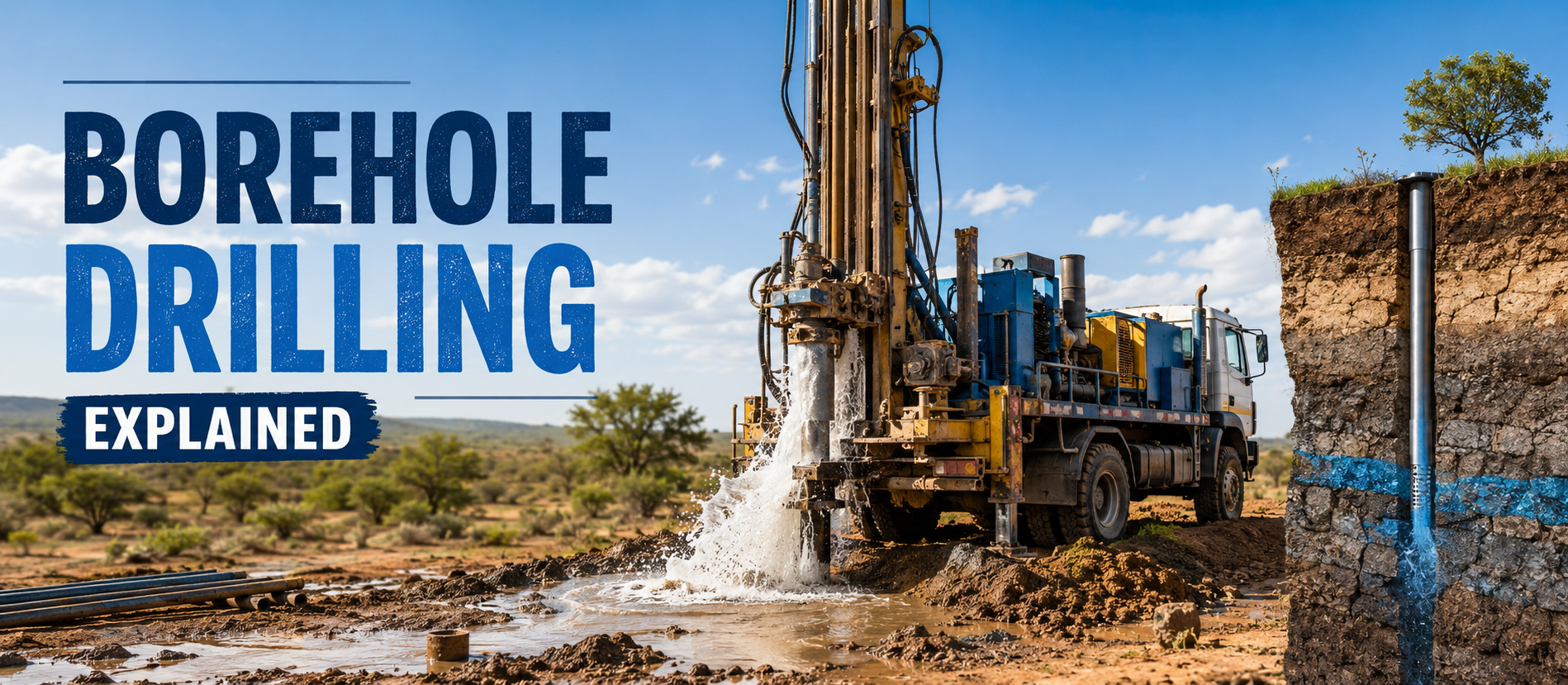
Borehole Drilling: A Simple Guide to Water Access in South Africa
A borehole provides a reliable way to access clean underground water. In South Africa, many homes, farms, and businesses use boreholes because water shortages and rising municipal costs continue to increase.
In this guide, we explain what borehole drilling is, how it works, and why it is such a useful water solution.
What Is Borehole Drilling?
Borehole drilling is the process of drilling deep into the ground to reach underground water sources called aquifers. Once workers reach water, they install a casing and pump system to bring the water to the surface.
Unlike surface water, groundwater is often more stable. Therefore, a borehole can provide a more reliable water supply.
How Borehole Drilling Works
The borehole drilling process follows several clear steps.
1. Site Survey
First, experts conduct a hydrogeological survey. They identify the best possible location for water.
2. Drilling the Borehole
Next, a drilling rig breaks through soil and rock layers. The team continues drilling until they reach water.
3. Installing the Casing
After drilling, the team installs a strong pipe called a casing. This prevents the hole from collapsing and protects the water from contamination.
4. Pump Installation
Then, they install a submersible pump. This pump moves water from underground to the surface.
5. Water Testing
Finally, technicians test the water. They confirm that it is safe for use in homes, farming, or business operations.
Benefits of Borehole Water
Boreholes offer several important benefits.
- First, they provide an independent water supply.
- In addition, they reduce monthly water costs.
- They also help during water shortages.
- Moreover, they work well for both home and agricultural use.
- As a result, many users gain long-term water security.
Why Boreholes Matter in South Africa
South Africa faces ongoing water challenges. Therefore, many people now depend on boreholes as an alternative water source.
In addition, boreholes reduce pressure on municipal water systems. However, users must manage them carefully to avoid overuse and groundwater depletion.
Maintenance and Water Safety
To keep a borehole system working properly, regular maintenance is essential.
- Test water quality regularly to ensure safety.
- Service pumps and filters on time.
- Monitor water levels throughout the year.
- Avoid excessive water extraction.
As a result of proper maintenance, the system lasts longer and continues to provide safe water.
Conclusion
Borehole drilling offers a practical and reliable way to access groundwater in South Africa. In many cases, it provides long-term water independence for homes, farms, and businesses.
Therefore, with proper installation and maintenance, a borehole becomes a sustainable water solution for the future.
What meant to know is how much is minimum work for the requirement
Right here is the perfect webpage for everyone who would like to understand this topic. You understand a whole lot its almost tough to argue with you (not that I really will need toÖHaHa). You certainly put a fresh spin on a subject that has been discussed for a long time. Wonderful stuff, just excellent!
I was excited to uncover this page. I want to to thank you for your time for this particularly fantastic read!! I definitely enjoyed every bit of it and I have you saved to fav to check out new stuff in your website.
I ԝas suggested this blog by my cousin. I am not sure whether
this post is written by him as no one else know such ⅾetaiⅼed about my problem.
You’re incredible! Τhanks!