
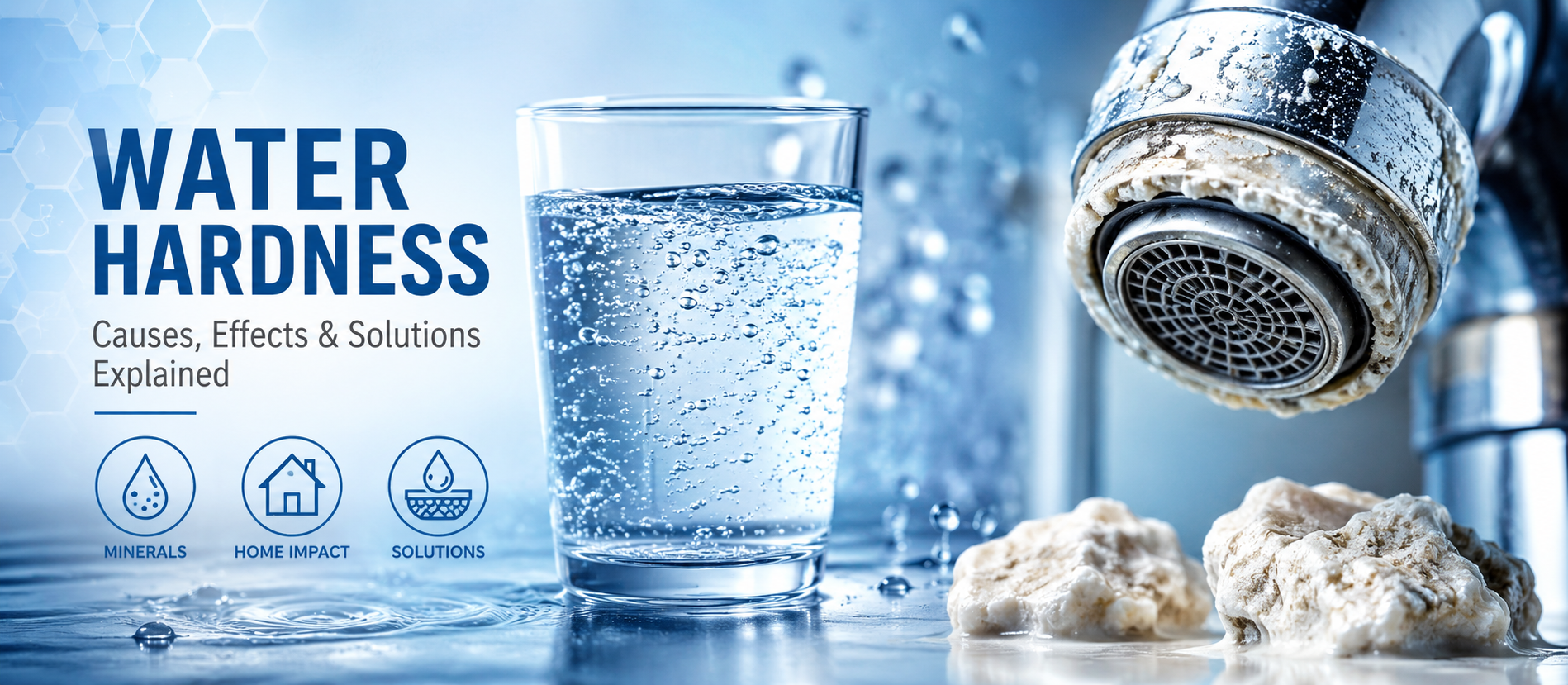
Water Hardness: Causes, Effects & Solutions Explained
Water hardness refers to the amount of dissolved minerals, mainly calcium and magnesium, found in water. These minerals enter water naturally as it flows through soil and rock formations such as limestone and chalk.
When water contains high levels of these minerals, it is considered hard. In contrast, water with low mineral content is known as soft water.
What Causes Water Hardness?
Water hardness develops when rainwater or groundwater passes through mineral-rich ground. As it moves through rocks, it slowly dissolves calcium and magnesium compounds.
Because of this natural process, groundwater sources often contain higher mineral levels than surface water sources like rivers or dams. As a result, many households using borehole or well water experience harder water.
How Water Hardness Affects Your Home
Hard water can create several noticeable problems in everyday use. For example, when you wash your hands, you may feel a slippery or filmy residue on your skin. This happens because soap reacts with calcium in the water, forming what is commonly known as soap scum.
In addition, hard water can leave spots and stains on dishes, glassware, and bathroom surfaces. Over time, these deposits become more difficult to remove.
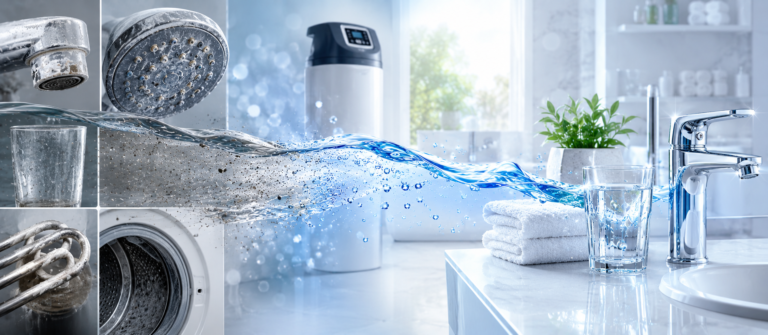
Appliances are also affected. When water is heated, the dissolved minerals can form scale inside kettles, geysers, and pipes. Consequently, this buildup may reduce efficiency and shorten the lifespan of equipment.
Common Signs of Hard Water
You may be dealing with hard water if you notice the following:
- Soap that does not lather easily
- White spots on dishes and glass
- Dry or irritated skin after washing
- Scale buildup on taps and showerheads
- Reduced water pressure over time
These signs usually become more visible as mineral levels increase.
Measuring Water Hardness
Water hardness is typically measured in milligrams per liter (mg/L) or parts per million (ppm), expressed as calcium carbonate.
Water is generally classified as follows:
- 0–60 mg/L: Soft water
- 61–120 mg/L: Moderately hard water
- 121–180 mg/L: Hard water
- 180+ mg/L: Very hard water
These values help determine whether treatment is needed.
Is Hard Water Dangerous?
Hard water is not considered harmful to human health. In fact, it can contribute small amounts of essential minerals like calcium and magnesium to your diet.
However, even though it is safe to drink, it can still cause inconvenience in household cleaning and plumbing systems. Therefore, many homeowners choose to treat it for comfort and efficiency reasons.
How to Treat Water Hardness
Fortunately, there are effective solutions available for managing hard water.
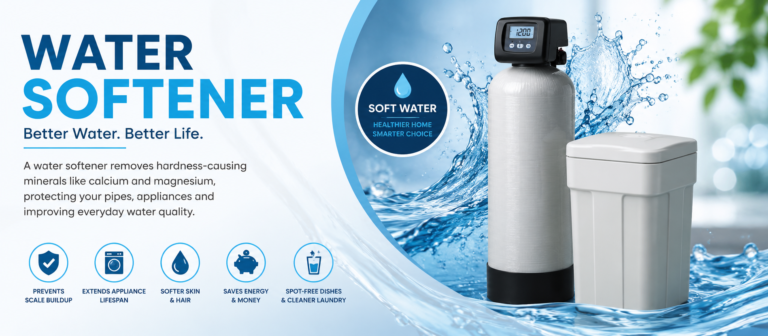
One of the most common methods is using a water softener. This system removes calcium and magnesium through a process called ion exchange. In this process, hardness minerals are replaced with sodium or potassium ions.
As a result, the water becomes softer, which helps reduce scale buildup and improves soap performance.
Other treatment options include:
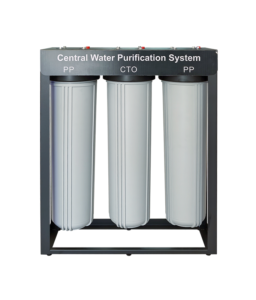
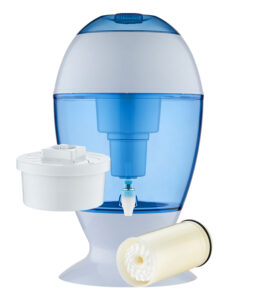
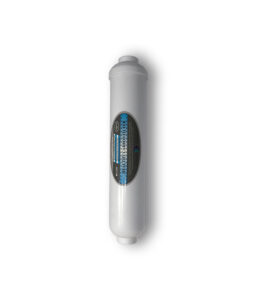
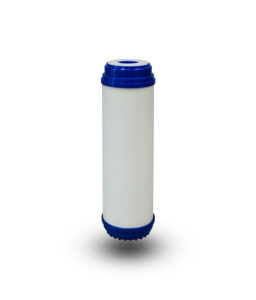
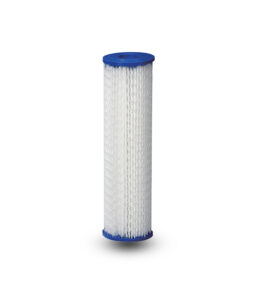
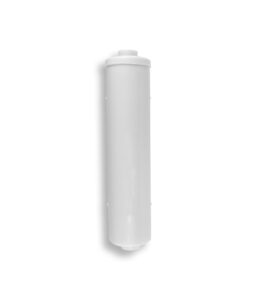
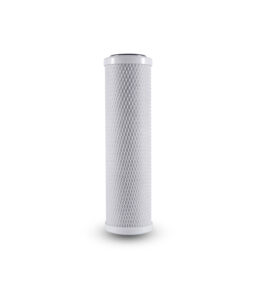
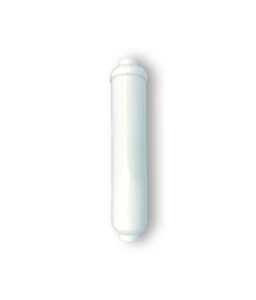
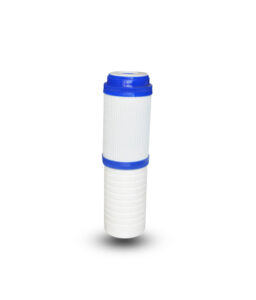
- Filtration systems designed to reduce mineral content
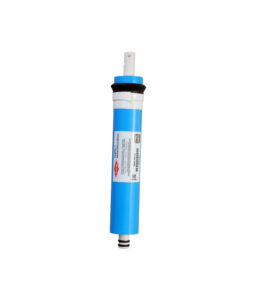
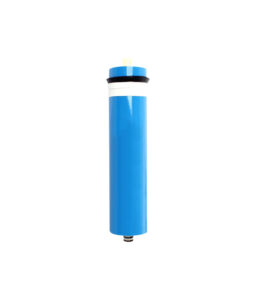
- Reverse osmosis systems for more advanced purification
- Regular descaling of appliances to reduce buildup
Choosing the right solution depends on your water quality and usage needs.
Benefits of Softened Water
Once water is softened, you may notice several improvements, including:
- Better soap and detergent performance
- Cleaner dishes and glassware
- Reduced scale in pipes and appliances
- Longer lifespan of household equipment
- Improved water flow efficiency
Because of these benefits, softened water is widely used in both residential and commercial settings.
Final Thoughts
Water hardness is a natural condition caused by dissolved minerals in water sources. Although it is not harmful to health, it can affect cleaning efficiency, plumbing systems, and appliances.
Fortunately, with proper treatment methods such as water softening, these issues can be effectively managed, leading to cleaner and more efficient water use in your home or business.
I was excited to uncover this page. I want to to thank you for your time for this particularly fantastic read!! I definitely enjoyed every bit of it and I have you saved to fav to check out new stuff in your website.