
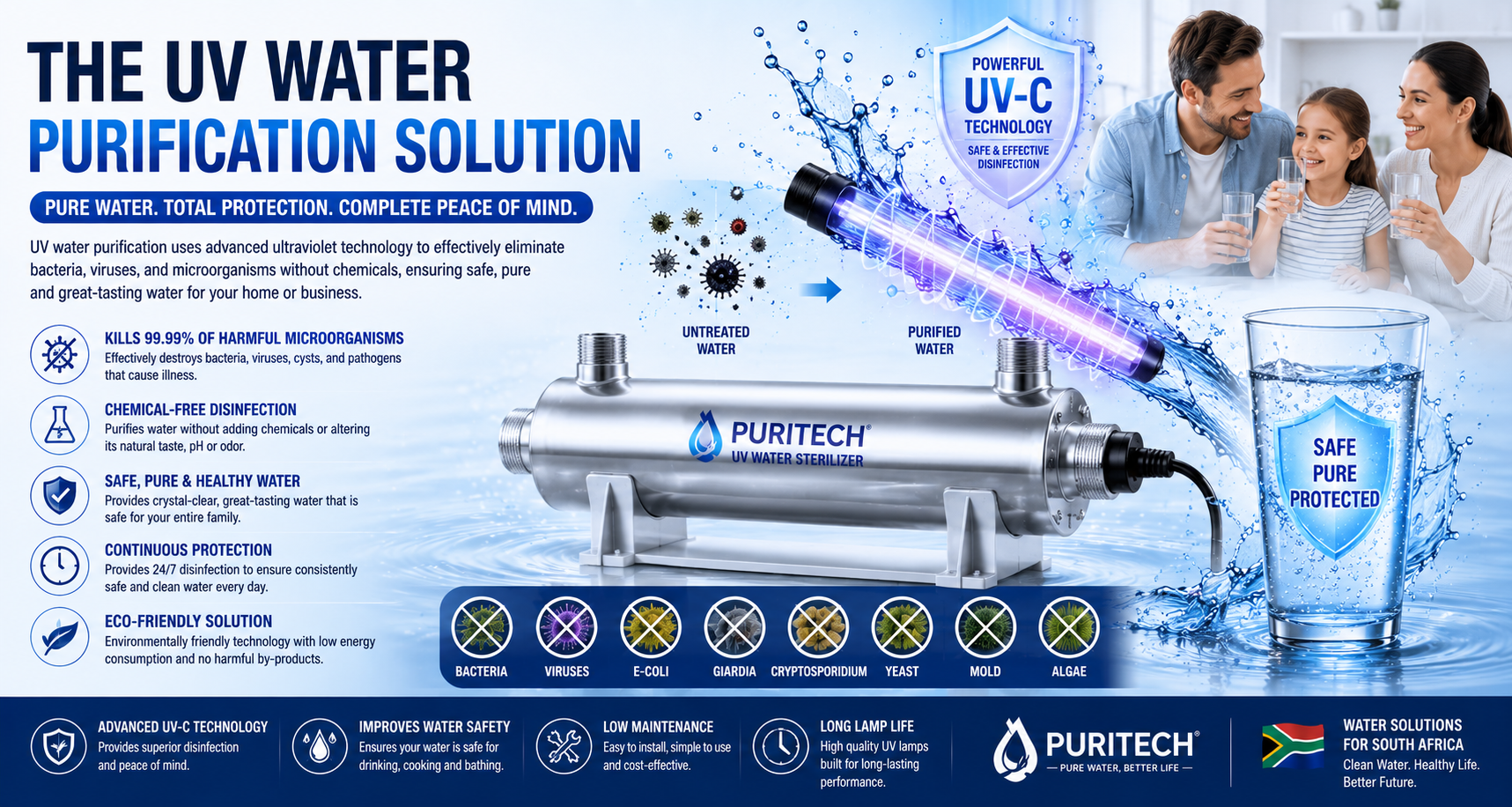
UV Water Purification Solution: A Smart Choice for Safe Drinking Water
A UV water purification solution is one of the most effective ways to protect your water supply from harmful bacteria, viruses, and other microorganisms. Using advanced ultraviolet technology, UV purification systems disinfect water without adding chemicals, making them an environmentally friendly and highly efficient treatment method for homes, businesses, and industrial applications.
What Is a UV Water Purification Solution?
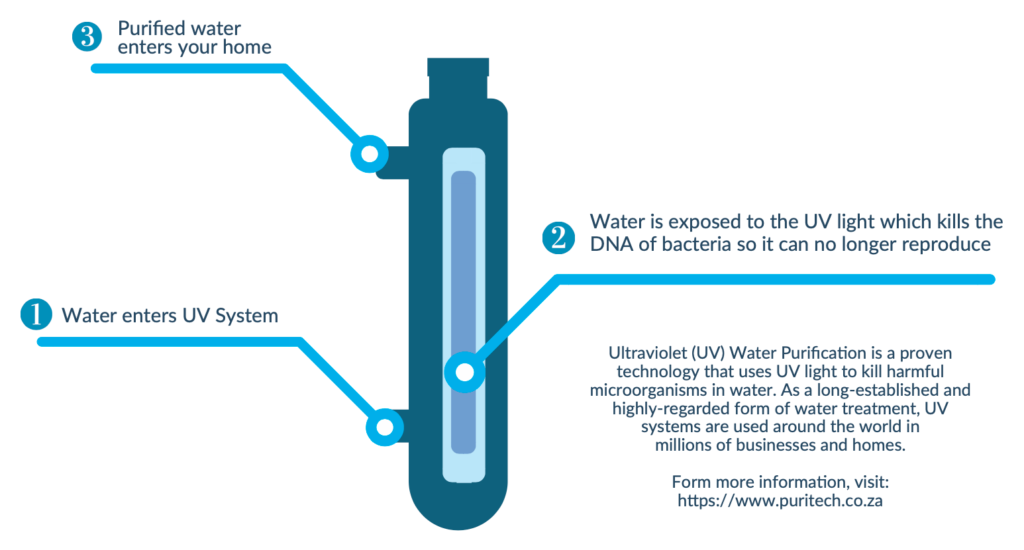
A UV water purification system uses ultraviolet light to neutralize microorganisms that may be present in water. As water passes through the treatment chamber, UV rays penetrate the cells of bacteria, viruses, and parasites, preventing them from reproducing and causing illness.
Unlike chemical treatments, UV technology disinfects water without affecting its taste, odor, or chemical composition.
How UV Water Purification Works
Ultraviolet Light Technology
The system generates UV-C light at a specific wavelength that targets microorganisms at the cellular level. This process effectively deactivates pathogens before the water reaches your tap.
Continuous Water Protection
A UV water purification solution operates continuously, providing reliable protection whenever water flows through the system.
Chemical-Free Disinfection
No chlorine, additives, or chemicals are required, making UV treatment an eco-friendly water purification method.
Benefits of a UV Water Purification Solution
Eliminates Harmful Microorganisms
UV systems effectively destroy:
- Bacteria
- Viruses
- E. coli
- Giardia
- Cryptosporidium
- Other waterborne pathogens
Improves Water Safety
By neutralizing harmful microorganisms, UV treatment helps ensure water is safe for drinking, cooking, and daily use.
Maintains Water Quality
Unlike chemical disinfection methods, UV purification does not alter the taste, smell, or appearance of water.
Environmentally Friendly
Because no chemicals are used, UV systems produce no harmful by-products and have minimal environmental impact.
Low Maintenance Requirements
Most UV systems require only periodic lamp replacement and routine maintenance, making them a cost-effective long-term solution.
Applications of UV Water Purification Systems
Residential Water Treatment
Homeowners use UV systems to ensure safe drinking water from municipal supplies, boreholes, and rainwater harvesting systems.
Commercial Facilities
Restaurants, hotels, offices, and healthcare facilities rely on UV purification to maintain water quality standards.
Industrial Water Treatment
Manufacturing plants and processing facilities often incorporate UV technology into their water treatment systems.
Reverse Osmosis Systems
Many reverse osmosis installations use UV purification as a final disinfection stage to provide an additional layer of protection.
Why Choose UV Water Treatment?
Fast and Effective
UV systems disinfect water instantly as it passes through the treatment chamber.
No Chemical Storage
There is no need to purchase, handle, or store chemicals for water treatment.
Reliable Performance
Modern UV systems are designed for continuous operation and dependable water protection.
Cost-Effective Operation
Low power consumption and minimal maintenance requirements help keep operating costs low.
UV Water Purification and Reverse Osmosis
Combining a reverse osmosis system with a UV water purification solution provides comprehensive water treatment. While reverse osmosis removes dissolved contaminants and impurities, UV technology eliminates microorganisms that may remain in the water supply.
This combination delivers exceptionally high-quality drinking water for residential and commercial applications.
HOW DOES UV WORK?
THE UV WATER PURIFICATION PROCESS
 Why do I need a UV?
If I’m On CITY WATER
- Water main breaks and broken pipes are a major cause of boil-water advisories.
- There are over 850 water main breaks every day in South Africa, and boil water advisories often aren’t issued for 24-48 hours after the contamination has occurred.
- Of the homes that have a water filtration device, only 10% have a system that can effectively protect against bacteria.
- An Ultraviolet water filter system will protect your family from harmful bacteria even during a boil water advisory.
If I’m On WELL WATER
- Wells are susceptible to bacteria from many sources.
- Improper good casing, causing corrosion, and poorly-installed good caps are common sources for well water contamination.
- Water levels change and fluctuate over time exposing the well to new opportunities for bacteria growth.
- Bacteria, including total coliform bacteria and E. coli, was found in one-third of wells, according to the US Geological Survey.
How to Get the Best Results From Your UV System
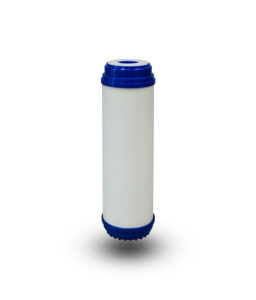
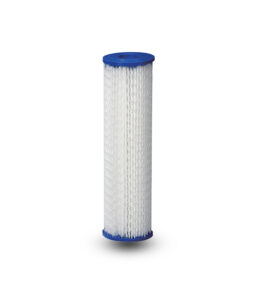
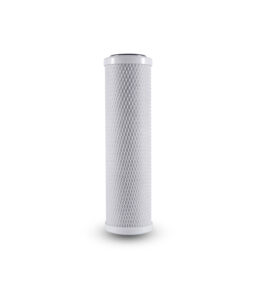
An ultraviolet water disinfection system cannot remove sediment, hardness, iron, lead, or chlorine. That’s why pre-filters are often installed before a UV system.
SEDIMENT
Sediment found in city and well water can be large enough to create shadows for bacteria to hide behind and thus, hinder the systems’ ability to effectively treat water. UV manufacturers highly recommend sediment filter be installed before the UV system to ensure proper water treatment.
If you have hard water, it may be necessary to have a water softener installed before the UV system. Hard water can cause scale build-up on the UV lamp which decreases the efficiency of the ultraviolet process.
THE UV ADVANTAGE
- EFFECTIVE
destroys 99.99% of microorganisms - TASTE & ODOR
chemical disinfection methods change the taste & the odor of water but UV does not - COST EFFECTIVE
only lamp & sleeve replaced annually - ENVIRO FRIENDLY
no disinfection byproducts and no wasted water - RELIABLE
works night and day, 24/7, consistently keeping water safe - QUICK PROCESS
water flows through the system with essentially no pressure loss and requires no separate holding tank - CLEAN & SAFE
no handling of chemicals
Can you provide cost on the uv equipment as mentioned.
Kind regards
There is certainly a lot to know about this issue. I love all of the points you made. Kennith Bafia
I was excited to uncover this page. I want to to thank you for your time for this particularly fantastic read!! I definitely enjoyed every bit of it and I have you saved to fav to check out new stuff in your website.