
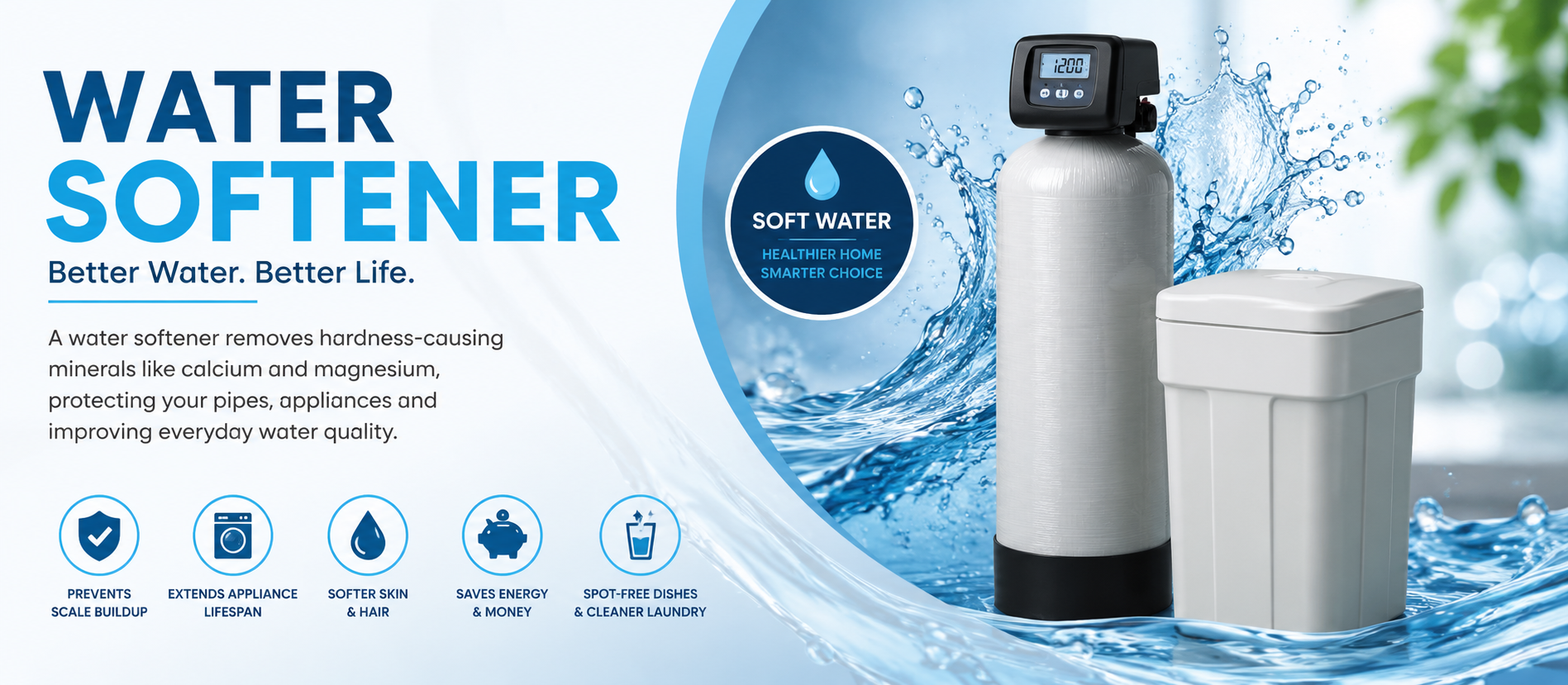
What Is a Water Softener? Complete Guide to Understanding Hard Water Treatment
Introduction
A water softener is one of the most effective solutions for treating hard water in homes and businesses. Hard water contains high levels of minerals such as calcium and magnesium, which can cause scale buildup, reduce appliance lifespan, and affect the quality of everyday water use.
A water softener removes or reduces these minerals, producing “soft water” that is gentler on plumbing systems, appliances, skin, and hair. In this guide, we explain exactly what a water softener is, how it works, and why it is essential in water treatment systems.
What Is a Water Softener?
A water softener is a filtration system designed to remove hardness-causing minerals—mainly calcium and magnesium—from water.
These minerals are naturally found in groundwater and are not harmful to health, but they can create serious household and industrial problems, including:
- Limescale buildup in pipes and appliances
- Reduced water flow and blockages
- Stiff laundry and dull fabrics
- Soap that does not lather properly
- Spots and residue on dishes and glassware
By removing these minerals, a water softener improves both water performance and system efficiency.
How Does a Water Softener Work?
Most modern water softeners use a process called ion exchange.
As hard water flows through the system:
- It passes through a tank filled with resin beads
- These beads are charged with sodium or potassium ions
- Calcium and magnesium ions in the water are attracted to the beads
- The hardness minerals are removed and replaced with sodium ions
- The result is soft, treated water
Once the resin beads become saturated with hardness minerals, the system automatically cleans itself through a process called regeneration, where a salt solution flushes the system and restores its efficiency.
What Is Hard Water?
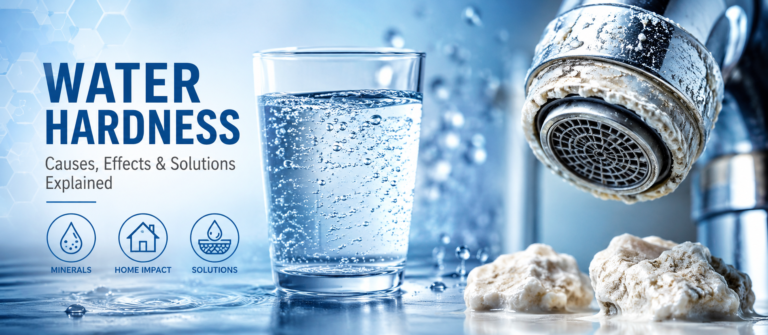
Hard water is water that contains high levels of dissolved minerals, mainly
- Calcium
- Magnesium
- Small traces of iron and other minerals
These minerals accumulate naturally as water moves through soil and rock formations. While safe to drink, hard water causes long-term issues in plumbing systems and household appliances.
Problems Caused by Hard Water
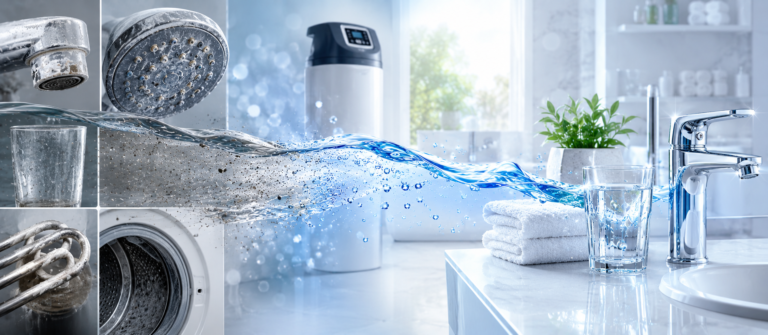
Without treatment, hard water can lead to several costly and inconvenient problems:
- Scale buildup inside pipes and heaters
- Reduced efficiency of geysers and appliances
- Increased energy consumption
- Frequent plumbing maintenance
- Poor soap and detergent performance
- Dry skin and hair after washing
Over time, these effects can significantly increase household maintenance costs.
Benefits of a Water Softener
Installing a water softener provides multiple long-term benefits:
- Prevents limescale buildup in pipes and appliances
- Extends the lifespan of water heaters, dishwashers, and washing machines
- Improves water flow and system efficiency
- Enhances soap and detergent performance
- Produces cleaner dishes, glassware, and laundry
- Improves skin and hair feel after washing
Softened water also helps reduce long-term maintenance and repair costs.
Types of Water Softeners
Salt-Based Water Softeners
These systems use ion exchange and require salt for regeneration. They are the most effective and widely used type.
Salt-Free Water Conditioners
These systems do not remove minerals but alter their structure to reduce scale formation. They are lower maintenance but less effective in very hard water areas.
Dual-Tank Systems
Designed for continuous use, these systems switch between tanks to ensure an uninterrupted soft water supply.
Where Are Water Softeners Used?
Water softeners are commonly used in:
- Residential homes
- Hotels and hospitality industries
- Restaurants and food preparation facilities
- Industrial processing plants
- Laundries and cleaning services
Any environment that relies heavily on water can benefit from softening systems.
Maintenance of a Water Softener
To ensure optimal performance:
- Check salt levels regularly (for salt-based systems)
- Clean the brine tank periodically
- Replace resin beads when needed (long-term use)
- Schedule routine servicing
A well-maintained system can last 10–15 years or more.
Why Water Softeners Are Important
Water softeners are not just about improving comfort—they protect entire plumbing systems and reduce long-term infrastructure damage caused by hard water.
By removing calcium and magnesium, they ensure that water systems run efficiently, appliances last longer, and everyday water use becomes more effective and enjoyable.
Conclusion
A water softener is a crucial component in modern water treatment systems. It removes hardness-causing minerals, prevents scale buildup, and improves overall water quality throughout a property.
Whether for residential or industrial use, installing a water softener is a long-term investment in efficiency, maintenance savings, and improved water performance.
I was excited to uncover this page. I want to to thank you for your time for this particularly fantastic read!! I definitely enjoyed every bit of it and I have you saved to fav to check out new stuff in your website.