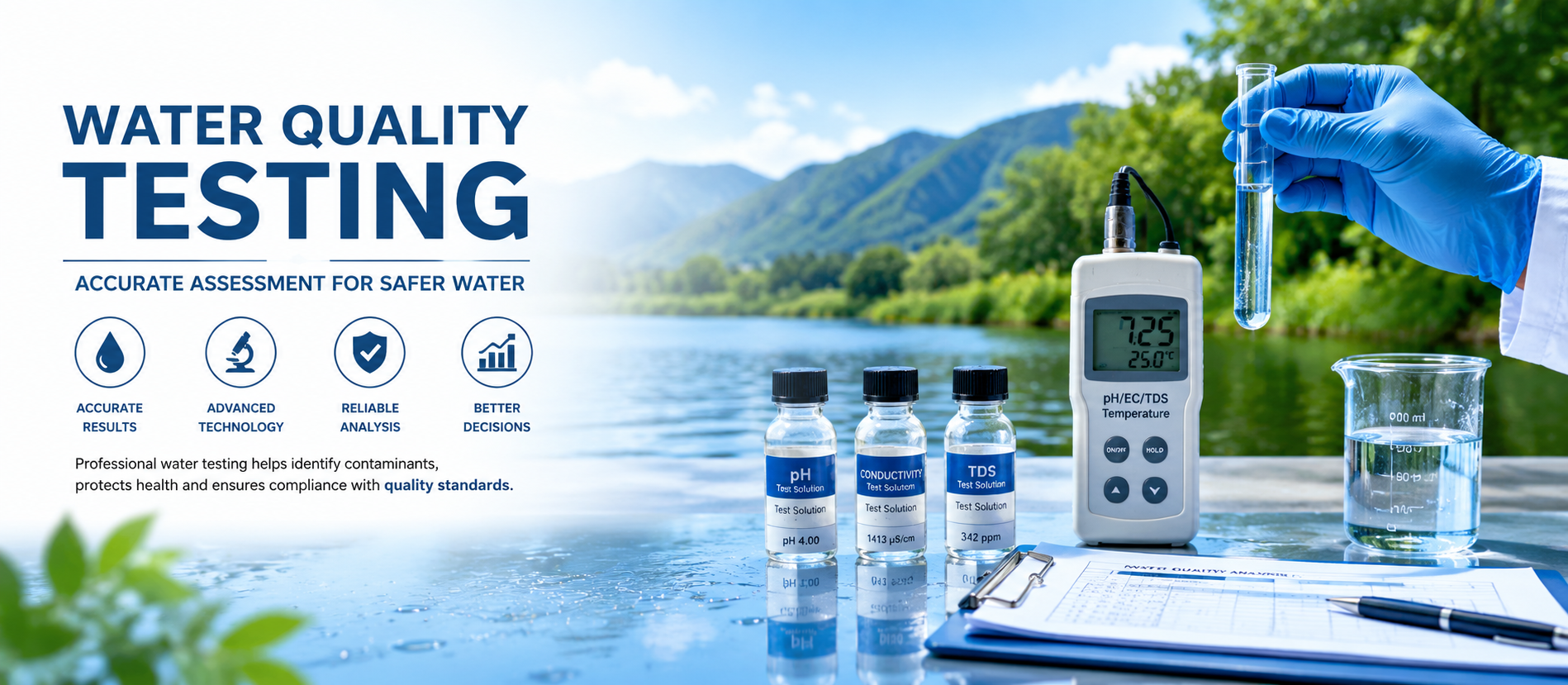
Water Quality Testing: Accurate Assessment Methods for Safer Water
Water quality testing is essential for maintaining safe, clean, and reliable water supplies. By evaluating the physical, chemical, and biological characteristics of water, organizations and property owners can identify contaminants, verify treatment performance, and protect public health. As a result, regular testing supports better water management and informed decision-making.
Whether water is used for drinking, industrial processes, agriculture, or commercial operations, routine analysis helps ensure that quality standards are consistently maintained.
What Is Water Quality Testing?
Water quality testing is the process of analyzing water samples to determine their condition and suitability for a specific purpose. Testing provides valuable information about contaminants, mineral content, microbial activity, and overall water quality.
Consequently, accurate analysis helps identify potential issues before they affect users, equipment, or treatment systems.
Why Water Testing Is Important
Regular testing offers several important benefits for homes, businesses, municipalities, and industries.
Protecting Public Health
Testing helps detect harmful substances and microorganisms that may compromise water safety. Therefore, corrective action can be taken before problems escalate.
Supporting Treatment Performance
Water analysis allows operators to evaluate how effectively treatment systems are working. In addition, it helps optimize filtration and purification processes.
Preventing Equipment Damage
Poor water conditions can contribute to scaling, corrosion, and system failures. Routine assessment helps identify risks early and reduce maintenance costs.
Meeting Quality Standards
Many organizations must comply with water quality regulations and industry requirements. Therefore, regular testing supports compliance and operational reliability.
Key Parameters Used in Water Analysis
Several measurements help determine the condition of a water source.
pH Levels
pH indicates whether water is acidic, neutral, or alkaline. Maintaining appropriate pH levels is important for treatment efficiency and equipment protection.
Total Dissolved Solids (TDS)
TDS measures dissolved minerals and salts present in water. Elevated levels may affect taste, treatment performance, and equipment longevity.
Turbidity
Turbidity measures water clarity by identifying suspended particles that may indicate contamination.
Conductivity
Conductivity testing estimates the concentration of dissolved ions and minerals within the water supply.
Dissolved Oxygen
Dissolved oxygen levels are often used to evaluate environmental and industrial water systems.
Microbiological Indicators
Testing for bacteria and other microorganisms helps determine whether water is safe for consumption and use.
Common Water Quality Testing Methods
Different testing methods provide varying levels of detail and accuracy.
Laboratory Analysis
Laboratory testing delivers comprehensive results and is often used when detailed water assessments are required.
Portable Testing Equipment
Portable instruments allow technicians to perform on-site measurements quickly and efficiently.
Digital Monitoring Systems
Modern monitoring equipment continuously measures key water parameters in real time. As a result, operators can respond rapidly to changing conditions.
Sensor-Based Technology
Advanced sensors collect accurate data and help streamline water management programs.
Water Assessment Techniques
Beyond testing, several assessment methods help interpret water quality data.
Sampling Procedures
Proper sample collection ensures reliable and representative test results.
Trend Evaluation
Historical data can reveal long-term changes in water conditions. Consequently, organizations can make proactive decisions regarding treatment and maintenance.
Risk Assessment
Risk assessments help identify potential contamination threats and determine appropriate mitigation measures.
Compliance Verification
Assessment programs help confirm that water quality remains within required standards and guidelines.
Applications of Water Quality Testing
Accurate testing supports a wide range of industries and water management activities.
Drinking Water Systems
Routine analysis helps maintain safe drinking water and supports effective treatment processes.
Borehole Water Assessment
Groundwater quality can vary significantly between locations. Therefore, regular testing helps determine the most appropriate treatment strategy.
Industrial Water Management
Industries use testing programs to protect equipment, improve efficiency, and maintain production standards.
Agricultural Operations
Farmers rely on water analysis to ensure water remains suitable for irrigation and livestock use.
Environmental Monitoring
Water resources such as rivers, dams, and lakes benefit from ongoing assessment to support environmental protection efforts.
Modern Technologies Improving Water Analysis
Technology continues to transform the way water is tested and monitored.
Many organizations now use the following:
- Automated sampling equipment
- Digital sensors
- Remote monitoring systems
- Cloud-based reporting platforms
- Data analytics software
As a result, testing programs can provide faster results, greater accuracy, and improved decision-making.
Choosing the Right Testing Approach
Selecting the most effective strategy depends on several factors.
These include:
- Water source type
- Intended water use
- Regulatory requirements
- Monitoring frequency
- Budget considerations
Therefore, a customized testing program often delivers the most reliable and cost-effective results.
The Future of Water Assessment
Advances in technology continue to improve testing accuracy and efficiency. Furthermore, automated systems provide real-time insights that help organizations respond more quickly to potential issues.
Consequently, modern testing solutions play an increasingly important role in protecting water resources and maintaining consistent quality standards.
Final Thoughts
Water quality testing remains one of the most important tools for ensuring safe and dependable water supplies. Through accurate analysis, regular assessment, and modern monitoring technologies, organizations can identify issues early and implement effective solutions.
In conclusion, a well-designed testing program helps protect public health, improve treatment performance, and support long-term water quality management.